Carrie Underwood’s retreat from Hollywood to the quiet hills of Tennessee wasn’t just a change of address—it was a declaration of values. She traded red carpets for front porches, premieres for school drop-offs, and the relentless pace of LA for the slower rhythm of Southern life. But even with the peace, privacy, and family closeness she sought, the transition has brought its own set of frustrations—ones few expected and even fewer talk about.
Years after stepping back from the spotlight, Underwood has quietly revealed that rural Tennessee living, while deeply fulfilling, isn’t the idyllic escape it appears from the outside. Behind the white fences and sprawling acreage of her Franklin estate lies a reality check about balancing fame, motherhood, and the limitations of small-town infrastructure.
She didn’t flee fame for fantasy. She sought authenticity. And authenticity, as it turns out, comes with complications.
A Return to Roots—And the Cost of Privacy
Carrie grew up in Checotah, Oklahoma—a town of fewer than 4,000 people. Rural life wasn’t new to her. But raising her two sons in Tennessee, away from Hollywood’s prying eyes, has exposed how difficult it is to truly disconnect when your face is on magazine covers and your concerts sell out stadiums.
Underwood and her husband, NHL star Mike Fisher, built a life anchored in routine: church on Sundays, backyard barbecues, school plays. But even in Franklin—a semi-rural suburb south of Nashville—privacy is fragile.
“People think moving to the country means you disappear,” she said in a recent interview. “But the truth is, everyone knows who you are. And sometimes, that makes normal life harder, not easier.”
Fans show up at her favorite coffee shop. Paparazzi linger near her kids’ school. Delivery drivers snap photos of the property. The very seclusion she sought becomes a magnet for attention.
It’s not just about intrusion. It’s about the emotional labor of managing expectations—hers and others’. She wants to be just another mom at the PTA meeting. But when she walks in, conversations pause. Cameras come out. The moment shifts.
This constant negotiation between public identity and private desire is exhausting. And it’s a burden few rural residents face—even if they live in celebrity-dense areas like Williamson County.
The Myth of Easy Living
Tennessee offers space, lower taxes, and wide-open skies. But for a high-profile family, the perks come with trade-offs.
One major frustration? Limited access to specialized services.
When one of her sons needed speech therapy, Underwood found that the best providers were either overbooked or based in downtown Nashville—nearly an hour’s drive each way. For a working parent juggling recording sessions, tours, and family time, that kind of commute isn’t trivial.
“It’s not like in LA, where you can find a pediatric neurologist, a nutritionist, and a child psychologist all on the same block,” she admitted. “Here, you’re calling three different counties just to get a referral.”
Even basic conveniences lag. High-speed internet—essential for schooling, remote work, and managing a global brand—is spotty in parts of Franklin. Power outages during storms can last days. And during winter ice storms, rural roads become impassable.
“I’ve had to cancel studio time because the roads are too dangerous,” she said. “In the city, you just call a car service. Out here, you’re stuck.”
These aren’t just annoyances—they’re logistical hurdles that compound over time, especially for someone whose career depends on consistency and connectivity.

Balancing Career and Community
Underwood still tours. She still records. She still co-hosts the CMA Awards. But doing so from rural Tennessee means constant back-and-forth between two worlds.
She’s built a home studio—state-of-the-art, soundproofed, and tucked into a separate building on the property. But even with that, collaboration isn’t seamless. Songwriting sessions with Nashville-based co-writers often require others to drive to her, not the other way around.
“Some people don’t want to make the trip,” she said. “And I get it. It’s not just the drive. There’s the gate, the security, the whole… vibe.”
That “vibe” is real. Her property is gated. Security cameras line the perimeter. Staff manage access. All necessary, but it creates a barrier—sometimes literal, sometimes social.
Local businesses appreciate her patronage, but long-term relationships are tricky. She can’t pop into a diner unannounced. She can’t shop for groceries without attracting a crowd. The very community she wanted to be part of often feels just out of reach.
And that isolation cuts both ways. She’s not just avoiding Hollywood. She’s also distanced from parts of the Nashville music scene—where informal networking over coffee or late-night jam sessions can spark new projects.
She’s not disconnected. She’s selectively connected. And that selectivity, while protective, can feel limiting.
Parenting in the Public Eye—From a Distance
One of Underwood’s top priorities has always been shielding her sons, Isaiah and Jacob, from the pressures of fame. But parenting in Tennessee hasn’t made that easier.
Rural schools often lack robust privacy policies. Class photos circulate on social media before parents even see them. Field trip announcements name students and parents explicitly. One parent once posted a photo of a school play with Carrie and Mike clearly visible in the front row—tagging them publicly.
“These are normal things parents deal with,” she said. “But when your kids are recognizable, it gets complicated fast.”
She’s had to advocate for stricter digital policies at school. She’s worked with administrators to limit photo sharing. But it’s a constant effort.
And then there’s the social side. Other kids ask questions. “Is that really Carrie Underwood’s son?” “Do you have a private jet?” “Can I come to your house and meet her?”
Underwood doesn’t want her children to grow up entitled. But she also doesn’t want them to feel targeted or different.
“It’s a tightrope,” she said. “You want them to be proud of who we are, but not defined by it. And in a small community, that line gets blurry.”
The Emotional Weight of “Choosing Normal”
Underwood didn’t leave Hollywood because she hated fame. She left because she wanted to raise her family on her terms.
But “normal” is a moving target when your life is anything but ordinary.
She’s talked about the guilt of traveling for work. The missed bedtimes. The anxiety of being away during school events. In the city, you could fly home between shows. In Tennessee, the distances are greater, the logistics tougher.
And when she’s home, she’s not just a mom. She’s a brand. A CEO. A performer. A wife. A public figure.
“There’s this idea that moving to the country simplifies life,” she said. “But for us, it just changed the kind of complexity we deal with.”
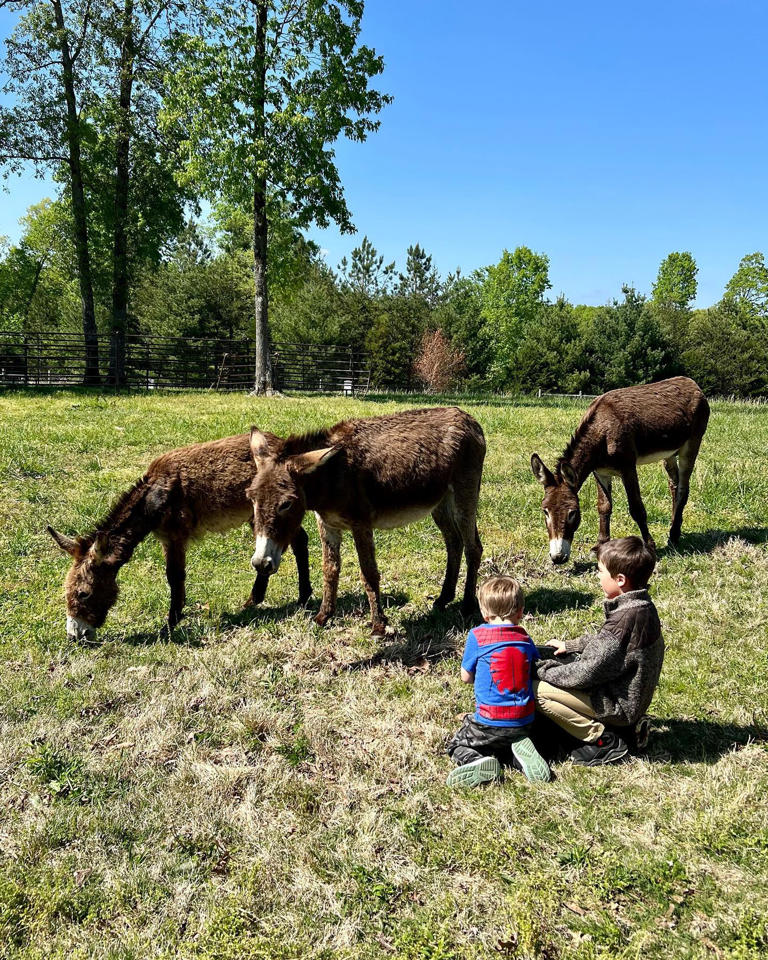
The farm animals, the gardens, the quiet mornings—they bring peace. But they also add responsibility. The goat needs fed. The irrigation system malfunctions. The fence needs repair. These aren’t metaphors. They’re daily tasks.
She loves it. She chose it. But she’s also honest: it’s not the escape hatch people imagine.
Why Her Honesty Matters
Carrie Underwood isn’t complaining. She’s clarifying.
By speaking openly about the frustrations of Tennessee life, she’s doing something rare: humanizing the myth of the celebrity retreat.
Too often, we assume that fame equals ease. That wealth erases struggle. That a gated estate in the South is a paradise untouched by stress.
But her experience shows that no amount of success eliminates the core challenges of modern life—parenting, work-life balance, community, connection.
If anything, fame intensifies them.
And by naming the difficulties—the logistical hurdles, the privacy paradox, the parenting pressures—she gives voice to something broader: the universal tension between who we are and who the world expects us to be.
Her story isn’t just about geography. It’s about identity.
Making It Work—On Her Own Terms
So how does she do it?
Routine. Boundaries. A strong team.
She schedules work blocks around school hours. Limits media appearances during family time. Uses remote tech to collaborate without traveling. And prioritizes small, meaningful rituals—Sunday dinners, bedtime stories, morning walks with the dogs.
She’s also invested in infrastructure: backup generators, high-capacity internet, a dedicated staff for home and travel logistics.
And she’s chosen transparency over perfection.
“I’m not trying to prove that country life is better,” she said. “I’m just saying it’s real. And real life is messy, no matter where you live.”
That honesty is her greatest strength. Not the flawless performances. Not the awards. But the willingness to show up, even when it’s hard.
Closing: The Quiet Power of Choosing Real
Carrie Underwood didn’t escape Hollywood to find peace. She left to find truth.
And truth, as she’s learned, isn’t found in flawless homes or perfect routines. It’s found in the friction—the daily negotiations between who you are and what the world wants from you.
Her life in Tennessee isn’t a retreat from reality. It’s a deeper dive into it.
For anyone weighing their own version of “normal”—whether you’re a celebrity, a parent, or just someone searching for balance—her story offers a clear message: fulfillment isn’t about location. It’s about intention.
Choose your values. Protect your peace. And expect the unexpected—even in paradise.
FAQ
Why did Carrie Underwood move to Tennessee? She moved to build a family-centered life away from Hollywood’s spotlight, drawn by Nashville’s music scene and Southern values.
Does Carrie Underwood still perform while living in Tennessee? Yes, she continues to tour, record music, and host major events like the CMA Awards, often traveling from her Tennessee home.
How does Carrie protect her kids’ privacy? She limits public appearances with her children, works with schools on photo policies, and avoids sharing their faces on social media.
What are common challenges of rural living for celebrities? Limited access to specialized services, privacy breaches, infrastructure issues, and social isolation despite community presence.
Is Franklin, Tennessee, a popular area for celebrities? Yes, Franklin and surrounding Williamson County are home to many musicians, athletes, and public figures seeking privacy near Nashville.
How does Carrie Underwood handle work-life balance? She uses strict scheduling, remote work tools, and a support team to align career demands with family priorities.
Has Carrie Underwood spoken about mental health and fame? Yes, she’s openly discussed anxiety, the pressure of public scrutiny, and the importance of therapy and self-care.
FAQ
What should you look for in Carrie Underwood on the Hidden Struggles of Tennessee Life? Focus on relevance, practical value, and how well the solution matches real user intent.
Is Carrie Underwood on the Hidden Struggles of Tennessee Life suitable for beginners? That depends on the workflow, but a clear step-by-step approach usually makes it easier to start.
How do you compare options around Carrie Underwood on the Hidden Struggles of Tennessee Life? Compare features, trust signals, limitations, pricing, and ease of implementation.
What mistakes should you avoid? Avoid generic choices, weak validation, and decisions based only on marketing claims.
What is the next best step? Shortlist the most relevant options, validate them quickly, and refine from real-world results.