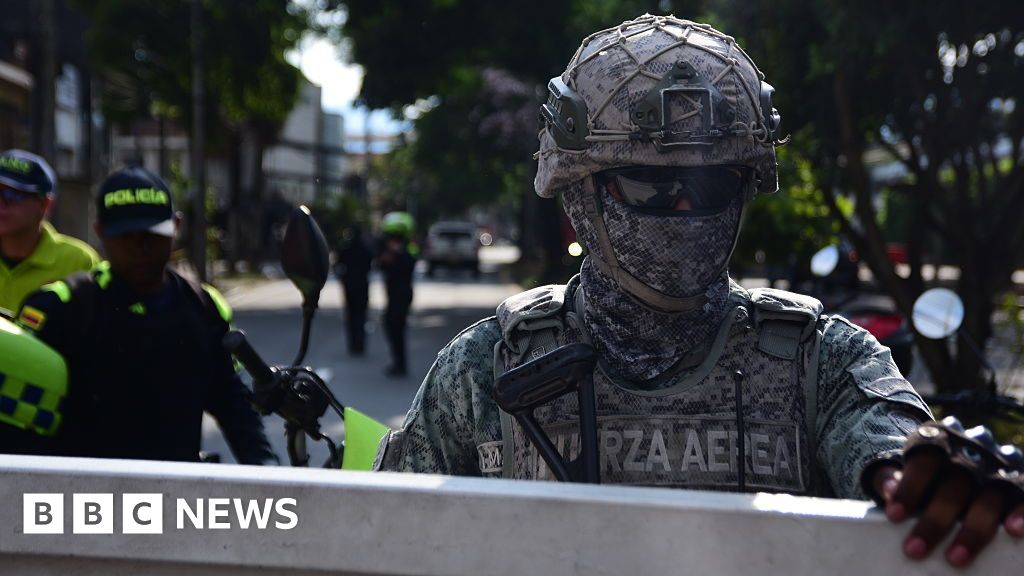
Colombia is teetering on the edge of chaos. In the weeks leading up to its pivotal presidential election, the country has been rocked by a wave of coordinated violence—dozens of attacks spanning rural highways, remote towns, and political hotspots. These incidents aren’t isolated. They’re part of a broader pattern suggesting that armed groups are exploiting the electoral vacuum to assert control, intimidate candidates, and manipulate voter behavior.
This isn’t just pre-election tension. It’s a calculated escalation.
The Surge in Violence: What’s Happening on the Ground
Since the start of the campaign season, over 40 violent incidents have been documented across more than a dozen departments, including Cauca, Chocó, and Norte de Santander. These attacks range from ambushes on security forces to arson at polling stations and targeted assassinations of local political figures.
One of the deadliest incidents occurred near Toribío, where a landmine explosion—allegedly planted by the EMC (a dissident faction of the former FARC)—killed three police officers and injured five civilians. In nearby El Tambo, electoral campaign offices were firebombed. In Arauca, clashes between armed factions and the military forced hundreds to flee before voting day.
These aren’t random acts. They’re strategic disruptions. The timing is no coincidence. As the country prepares to choose a new leader, armed actors are testing the state’s capacity to maintain order. The goal? To project power, weaken democratic institutions, and influence outcomes—either by force or by fear.
Why Armed Groups Are Striking Now
Colombia’s post-peace accord landscape has created a fragmented security vacuum. While the 2016 agreement with the FARC disarmed thousands, it left a power gap that rival factions have rushed to fill.
Today, the country faces a mosaic of threats: - EMC (Estado Mayor Central): A faction of ex-FARC guerrillas rejecting the peace deal, active in coca-producing regions. - Gulf Clan (Clan del Golfo): The largest paramilitary successor group, controlling drug trafficking routes. - ELN (National Liberation Army): A leftist insurgency still engaged in irregular warfare. - Local mafias and urban gangs: Increasingly involved in political extortion.
These groups thrive in regions where the state is weak. And right now, the political transition offers a golden opportunity.
Elections mean movement—candidates touring remote areas, activists organizing rallies, and security forces stretched thin. Armed factions exploit this exposure. By attacking transport routes or threatening campaign staff, they can silence opposition voices, particularly those advocating for land reform or anti-corruption measures.
For example, in March, a mayoral candidate in Putumayo withdrew from the race after receiving death threats traced to the Gulf Clan. In April, a community leader in Nariño was assassinated days after speaking out against forced recruitment. These incidents weren’t just crimes—they were messages.
The Government’s Response: Can Order Be Restored?
The national government has mobilized over 120,000 security personnel for election day, the largest deployment in recent history. Military checkpoints have been reinforced, surveillance drones deployed in high-risk zones, and special units assigned to protect candidates.
But presence doesn’t equal control.

In many rural municipalities, police stations operate under siege. Supplies are delivered under armed escort. Mobile ballot boxes—critical for remote voters—are vulnerable to ambush. The state’s reach remains thin, and its credibility even thinner.
Critics argue that the response is reactive, not strategic. While troops guard polling stations, the underlying networks enabling violence—drug trafficking, land grabbing, political collusion—remain untouched. “We’re protecting the vote on one day,” said a security analyst in Bogotá, “but ignoring the systems that make that vote meaningless the rest of the year.”
There’s also concern about intelligence gaps. In at least three incidents, warnings were issued by local monitors, but no preventive action was taken. This suggests a breakdown in coordination between national agencies and community-level actors who often see violence coming before it hits.
Impact on Voters: Fear, Suppression, and Disenfranchisement
The most immediate consequence of this violence isn’t body counts—it’s silence.
In conflict-affected areas, voter turnout has dropped sharply in pre-election surveys. In Cauca, where five candidates have been assassinated this year, nearly 60% of respondents in a recent poll said they felt unsafe attending political events. In Chocó, community councils have canceled public forums entirely.
This is the real objective: not just to disrupt, but to disengage.
Historically, armed groups in Colombia use violence to manipulate electoral outcomes—not by stuffing ballot boxes, but by shrinking participation. When fear keeps people home, marginalized communities lose representation. And when moderate candidates drop out, extremists gain ground.
There’s precedent. In the 2002 election, amid peak conflict, voter turnout in the most violent departments was less than 30%. The resulting government prioritized military solutions over negotiation—a shift that reverberated for years.
Now, with a polarized race between reformist and conservative candidates, the stakes are just as high. If violence suppresses turnout in key regions, it could tilt the balance.
Political Candidates Under Threat
More than 120 political candidates have reported threats this election cycle, according to Indepaz, a Bogotá-based peace observatory. At least seven have been killed—most recently, Luis Fernando Aguilar, a mayoral hopeful in Caquetá, shot dead while traveling to a campaign event.
These assassinations follow a pattern. Victims are often local leaders with limited security detail. They advocate for land rights, environmental protection, or youth programs—issues that threaten illicit economies.
The national candidates aren’t immune. One presidential contender suspended a campaign tour in May after intelligence reports indicated a plot to attack his convoy in southern Colombia. Another has traveled exclusively by helicopter in high-risk zones.
While major candidates have state protection, their local organizers do not. This creates a cascading effect: as grassroots networks collapse, so does the ability to mobilize support in rural areas—where elections are often decided.
International Concerns and Election Integrity
The U.S., European Union, and Organization of American States have all issued statements expressing alarm. The EU has deployed a 30-member election observation mission—the largest in over a decade—with a specific mandate to monitor violence and voter intimidation.
Still, questions linger about legitimacy. If polling stations in conflict zones open late, close early, or report irregularities, the results could be challenged. Legal challenges are already being prepared by opposition parties in anticipation of disputes.

Moreover, digital threats are rising. In May, a coordinated disinformation campaign emerged on social media, falsely claiming that certain regions would be unsafe on election day. While not violent in the traditional sense, such tactics amplify fear and discourage participation—essentially a non-kinetic form of voter suppression.
International monitors warn that even perceived illegitimacy can destabilize the post-election period. “A disputed outcome in this environment could reignite armed mobilization,” said a senior OAS official.
How This Could Shape Colombia’s Future
The post-election window is fragile. If the winning candidate lacks broad legitimacy—or if armed groups feel emboldened by their influence—they may refuse to negotiate or escalate attacks.
There are two possible trajectories:
- A return to militarized rule – A government that responds to violence with overwhelming force, sidelining peace initiatives. This could stabilize cities in the short term but deepen rural resentment.
- A renewed push for dialogue – A leader who treats the violence as a symptom of systemic failure, not just crime. This would require re-engaging with non-state actors, investing in rural development, and strengthening local governance.
Which path Colombia takes depends not just on who wins—but on whether the state can reassert authority without fueling more conflict.
A Country at a Crossroads
Colombia stands at a historic inflection point. The violence ahead of this election isn’t a side effect—it’s a signal. Armed groups are not just resisting change; they’re trying to shape it.
The international community can help with observation and aid. The military can protect polling stations. But lasting stability requires something deeper: trust. Trust that voting matters. That leaders will represent the people. That security isn’t just for the cities.
The attacks of recent weeks should not be seen as isolated events. They’re a challenge to democracy itself.
For Colombians, the choice is clear: vote despite the fear. For the world, the responsibility is to bear witness—and to support the institutions that make free elections possible.
Frequently Asked Questions
What areas of Colombia are most affected by election-related violence? Cauca, Chocó, Norte de Santander, Arauca, and Putumayo are the most impacted, with high concentrations of armed activity and political assassinations.
Are presidential candidates being directly targeted? While no presidential candidate has been attacked, several have received credible threats, leading to canceled events and increased security details.
How many candidates have been killed in the current election cycle? At least seven candidates have been assassinated, according to Indepaz, with dozens more receiving death threats.
Is the election still considered safe for voters? Security forces have increased presence, but risks remain high in rural and conflict-affected zones. Voter safety varies significantly by region.
Could the election results be invalidated due to violence? Formal invalidation is unlikely, but widespread intimidation could lead to legal challenges and questions about legitimacy.
What role are international observers playing? The EU, OAS, and others have sent monitoring teams to assess election integrity, particularly in high-risk areas.
How does this violence compare to past elections in Colombia? While not as severe as the early 2000s, this cycle marks a significant resurgence in pre-election violence after a period of relative calm post-2016 peace deal.
FAQ
What should you look for in Violence Escalates in Colombia Ahead of Presidential Vote? Focus on relevance, practical value, and how well the solution matches real user intent.
Is Violence Escalates in Colombia Ahead of Presidential Vote suitable for beginners? That depends on the workflow, but a clear step-by-step approach usually makes it easier to start.
How do you compare options around Violence Escalates in Colombia Ahead of Presidential Vote? Compare features, trust signals, limitations, pricing, and ease of implementation.
What mistakes should you avoid? Avoid generic choices, weak validation, and decisions based only on marketing claims.
What is the next best step? Shortlist the most relevant options, validate them quickly, and refine from real-world results.